
Picture the situation: in 30 minutes you have a viewing for a promising property. The prospective buyers are already on their way and everything is perfectly prepared. But when you reach for the key board in the office, you grasp thin air. Where is the property key? Which colleague still has it in their pocket from the last appointment?
In this article we walk through the most common pitfalls in key management at estate agencies — and how to get them under control effortlessly and with a proper audit trail using Log+Key.
What key risks do estate agents face?
The five most common key risks in an estate agency — and how to solve them with Log+Key:
1. A viewing in 30 minutes and the key is missing 🔑
- The problem: Several agents work on the same properties. A key is often taken straight from one appointment to the next without the office knowing. The result: frantic phone calls, late viewings and an unprofessional impression on the client.
- The Log+Key solution: With our mobile web app and the smart terminals, you can see at any time who currently has a key and until when. No more hunting around: one glance at the system immediately shows which colleague is looking after the property.
2. A call six months later: 'Who was in my property?' 👀
- The problem: Owners entrust your office with valuable properties and their keys. When someone asks months later who entered the property or where the key is, vague answers are not enough. You risk a loss of trust — and, at worst, an expensive lock replacement.
- The Log+Key solution: Log+Key documents every movement in an audit-proof way. Using the history feature you can show owners exactly when a key was checked out, returned or handed over, even months after it was deposited with you — with automatic email receipts if you want them.
3. No time for key books and search parties 🔎
- The problem: Paper key books, scraps of paper or trust-based systems fail the moment things get hectic. Keys pass from hand to hand without anyone recording it.
- The Log+Key solution: Secure handovers at the terminal or via the web app — only authorised people get access. Automatic return deadlines remind people to bring keys back on time. The system does not force bureaucratic overhead on you; it turns digital sign-off into a matter of seconds.
4. Handing over keys after completion 🤝
- The problem: The deal is done! But which keys actually belong to the property? Front door, flat, cellar, loft, letterbox... If the handover to the buyer is not documented, disputes can follow.
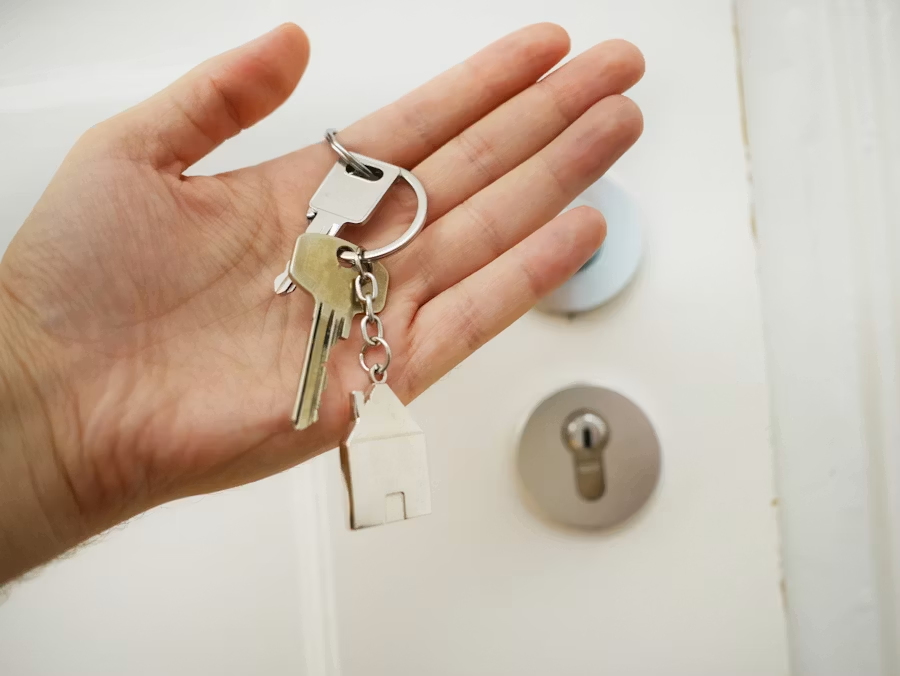
- The Log+Key solution: In Log+Key you record exactly which components a key ring contains, using photos and custom comment fields. At handover you generate digital handover records with a single click and send automatic receipts to buyer and seller.
5. Months of responsibility without a system 🗓️
- The problem: Some properties stay on the market for months. During that time contacts change or appointed service providers (tradespeople, for example) collect the keys — and the risk of loss grows week by week.
- The Log+Key solution: Thanks to targeted access rights and automatic reminders for overdue keys, you stay in full control even on long-running mandates. Set simple rules for maximum loan periods, including email reminders, so no key is ever forgotten again.
How do you record keys you receive from the owner?
Responsibility for a property key starts the moment it is handed in — and that is exactly where estate agencies often lack a record. This is how to document the acceptance:
- Create the key: with the property address and the owner’s name, plus a photo of the bunch if needed.
- Confirm the acceptance: date, number of keys and the owner’s signature on the tablet if you want it.
- Scan every movement: each check-out for a viewing and each return goes into the history.
- Return at the end of the instruction: hand the key to the owner or buyer and record it the same way.
If you still record acceptances on paper, our free key handover form helps.
What belongs in the handover record after completion?
After completion, all keys go to the buyer — and later only the record shows what was handed over. This checklist helps you not to miss anything:
| Key / detail | What you record |
|---|---|
| Front door and flat | Number of each key, plus the key number if there is one |
| Cellar, loft, letterbox | Number and assignment, such as the number of the cellar compartment |
| Garage or underground car park | Key, remote control or card |
| Photos | A picture of the complete bunch at handover |
| Handover | Date, names of both parties, signature and a copy for the buyer |
For handing over a flat, our free tenancy key handover template is available. In Log+Key, the record is created as you scan the keys out, and the receipt can go to the buyer by email.
How can several agents share property keys?
The more agents work on the same properties, the more often a key travels straight from one appointment to the next. Three rules have proved their worth:
- Every check-out is scanned — at the terminal in the office or by smartphone on the road. The live overview then shows who has the key right now and until when.
- Every key gets a return date. Once it has passed, the key is shown as overdue, and Log+Key can send a reminder by email.
- External people get no account, but they do get a record: you add photographers or tradespeople as contacts and assign the key to them — with a signature and a PDF receipt if needed.
Do you also manage properties alongside your agency work? Then take a look at our guide to key management for property managers.
Move from paper chaos to digital control!
Professional key management is more than just tidiness; it is an important signal of how professional and reliable your estate agency is. Read more about the benefits of Log+Key for the property sector.
Book a free demo now! In 15 minutes we will show you how easily it fits into your working day. Or set up your own test instance in a few steps and see for yourself!